Choosing the right foundation system can make or break your construction project. Understanding ground anchors, helical piles, and concrete footings ensures structural integrity and long-term stability.

🏗️ Understanding Foundation Systems: The Backbone of Every Structure
Foundation systems serve as the critical interface between structures and the earth beneath them. Whether you’re building a residential deck, commercial building, or industrial facility, the foundation type you select directly impacts project costs, construction timeline, and structural performance for decades to come.
Each foundation method—ground anchors, helical piles, and concrete footings—offers distinct advantages depending on soil conditions, structural loads, environmental factors, and project requirements. Making an informed decision requires understanding how these systems work, where they excel, and what limitations they present.
Ground Anchors: Securing Stability Through Tension
Ground anchors, also known as earth anchors or soil anchors, represent a specialized foundation solution that relies on tensile strength rather than compression. These systems work by transferring loads deep into stable soil layers or rock formations through high-strength steel tendons or cables.
How Ground Anchors Function
The installation process involves drilling a borehole into the ground at a predetermined angle, inserting a steel tendon assembly, and grouting it in place. Once the grout cures, the anchor is tensioned to a specific load, creating a secure connection between the structure and deep soil layers.
This tensioning process is what distinguishes ground anchors from other foundation types. The applied tension activates the anchor’s holding capacity immediately, allowing engineers to verify performance before the structure is built.
Ideal Applications for Ground Anchor Systems
Ground anchors excel in several specific scenarios:
- Retaining wall stabilization where lateral earth pressure requires resistance
- Slope stabilization projects preventing landslides and soil movement
- Tieback systems for excavation support in urban environments
- Foundation underpinning for existing structures experiencing settlement
- Tower and transmission line foundations requiring uplift resistance
- Temporary bracing systems during construction phases
Advantages of Ground Anchor Technology
Ground anchors offer compelling benefits that make them preferable in certain conditions. Their installation requires minimal excavation, reducing site disturbance and environmental impact. The ability to install anchors at various angles provides flexibility in addressing different load directions.
Cost efficiency emerges particularly in projects where conventional foundations would require extensive excavation or mass concrete volumes. Ground anchors can often be installed in restricted access areas where larger equipment cannot operate effectively.
The immediate load verification through testing provides confidence that other foundation types cannot match until the structure is completed and loaded.
Limitations and Considerations ⚠️
Despite their advantages, ground anchors have limitations. They require competent soil or rock at depth to develop adequate holding capacity. In loose, cohesionless soils or highly compressible materials, alternative foundation systems may prove more reliable.
Specialized equipment and trained personnel are necessary for proper installation and testing. The reliance on grouting means that installation conditions—particularly temperature and moisture—can significantly affect performance.
Long-term corrosion protection requires careful design, especially in aggressive soil environments or coastal areas. Additionally, ground anchors typically require access to underlying property, which may involve easement agreements.
Helical Piles:螺 Screwing Into Soil Strength
Helical piles, sometimes called screw piles or helical anchors, combine ancient screw mechanics with modern engineering. These steel shaft systems feature helical bearing plates that cut into soil during installation, creating a deep foundation system suitable for both tension and compression loads.
The Engineering Behind Helical Pile Systems
A helical pile consists of a central steel shaft with one or more helical plates welded at specific intervals. Installation involves rotating the pile into the ground using hydraulic machinery, with the helical plates functioning like threads on a screw.
As the pile advances, the helical plates cut through soil layers, compacting surrounding material and creating bearing surfaces. The installation torque correlates directly with bearing capacity, allowing real-time verification of foundation performance.
When Helical Piles Become the Optimal Choice
Helical piles demonstrate particular effectiveness in several construction scenarios:
- Sites with challenging soil conditions including soft clays and loose sands
- Renovation and retrofit projects where existing structures limit access
- Solar farm installations requiring rapid, cost-effective foundations
- Boardwalks and structures over environmentally sensitive areas
- Foundations requiring immediate load-bearing capacity without curing time
- Seismic zones where ductility and flexibility provide advantages
Compelling Benefits of Helical Pile Foundations
The speed of installation ranks among helical piles’ most significant advantages. A single crew can install dozens of piles daily, dramatically reducing project schedules compared to concrete alternatives. There’s no curing time—structures can be built immediately after installation.
Environmental benefits include minimal soil disturbance, no concrete waste, and significantly reduced construction vibration. These factors make helical piles particularly attractive for projects near existing structures or in ecologically sensitive areas.
Installation generates minimal noise compared to driven piles, making them suitable for residential areas with strict noise ordinances. The piles can also be removed and relocated if project requirements change, offering reusability that concrete foundations cannot match.
Year-round installation capability provides schedule flexibility regardless of weather conditions. Unlike concrete, which requires specific temperature ranges for proper curing, helical piles can be installed in freezing conditions.
Understanding Helical Pile Limitations
Helical piles encounter difficulties in certain soil conditions. Dense soils, cobbles, or bedrock can prevent proper installation or damage helical plates during advancement. Soil investigations become critical to identify such conditions before selecting this foundation type.
While installation torque correlates with capacity, this relationship varies with soil type and installation technique. Professional engineering evaluation remains essential rather than relying solely on torque readings.
The relatively small bearing area compared to concrete footings means helical piles may not be economical for structures requiring extremely high individual foundation capacities. In such cases, multiple piles or alternative foundation systems may prove more cost-effective.
Concrete Footings: The Traditional Foundation Workhorse
Concrete footings remain the most widely used foundation system globally, representing proven technology refined over millennia. These spread footings distribute structural loads across soil through mass and bearing area, relying on soil bearing capacity rather than deep penetration.
Types and Configurations of Concrete Footings
Concrete footings come in various configurations, each suited to specific structural requirements:
- Isolated footings support individual columns or posts
- Strip footings run continuously under load-bearing walls
- Combined footings support multiple columns when spacing is limited
- Mat or raft foundations spread loads across entire building areas
- Grade beams connect individual footings while spanning between them
The Construction Process for Concrete Footings
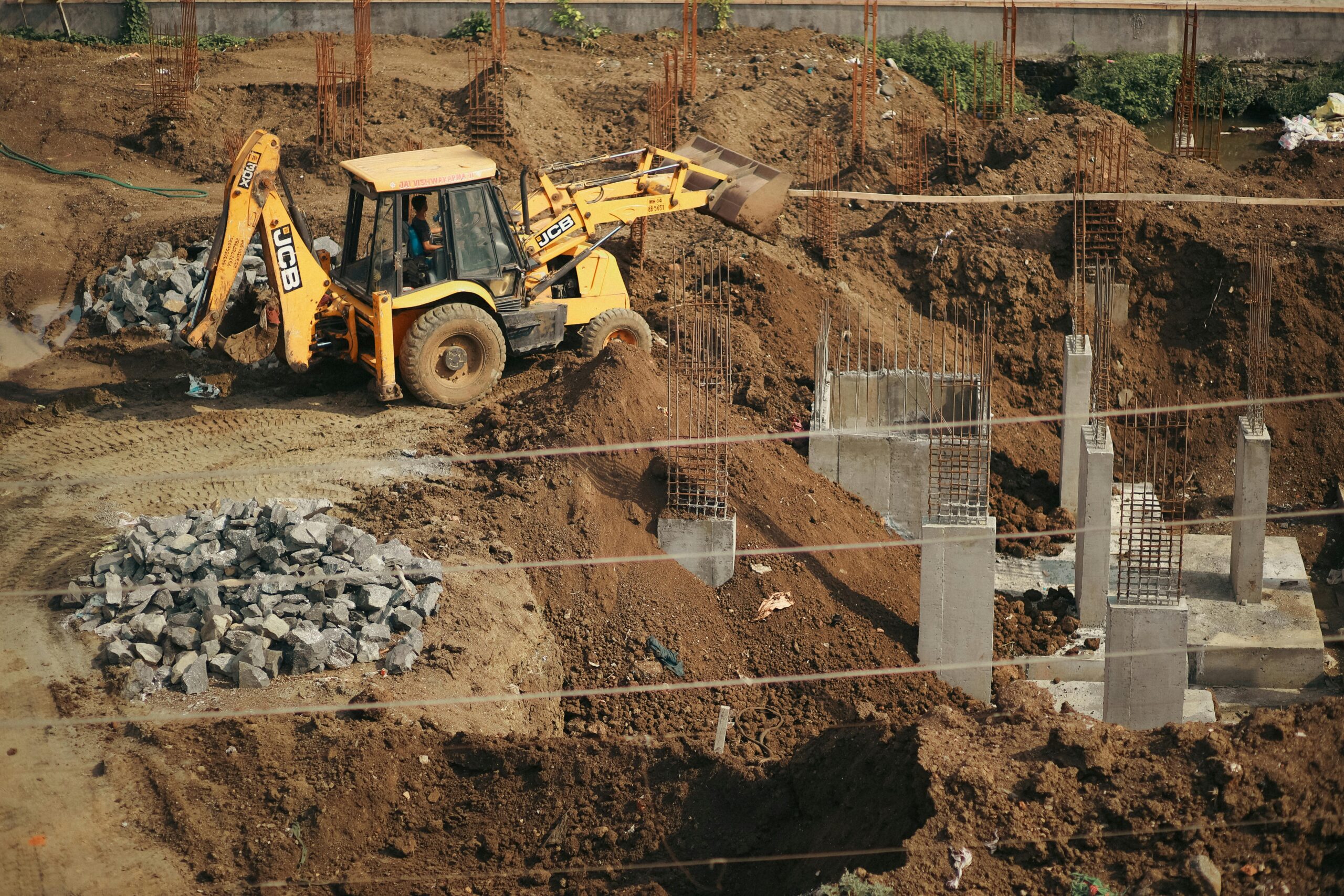
Installing concrete footings involves excavating to appropriate depth, preparing the subgrade, placing reinforcing steel, and pouring concrete. The process appears straightforward but requires attention to numerous details affecting long-term performance.
Excavation depth must reach below frost lines in cold climates and extend to competent bearing soil. Formwork defines footing dimensions and ensures proper concrete placement. Reinforcement steel provides tensile strength that concrete alone cannot offer.
Concrete mixing, placement, and curing follow strict specifications to achieve design strength. The curing period—typically 7 to 28 days depending on loading—represents a schedule consideration that other foundation types avoid.
Where Concrete Footings Excel
Concrete footings remain the default choice for many construction projects due to their versatility and proven performance. They work effectively in competent soils with adequate bearing capacity and reasonable excavation conditions.
For residential construction, concrete footings provide economical solutions where soil conditions are favorable. The materials are readily available, and most contractors possess the expertise to install them correctly.
Large commercial and industrial structures often require the mass and bearing area that only concrete footings can economically provide. When foundation loads are extremely high, the cost per ton of capacity often favors concrete over alternative systems.
Concrete footings also provide excellent resistance to lateral loads when properly designed with adequate embedment depth. This makes them suitable for structures experiencing wind or seismic forces.
Advantages That Keep Concrete Relevant
The widespread availability of materials and installation expertise makes concrete footings accessible in virtually any location. Competition among contractors typically results in competitive pricing for standard installations.
Concrete footings provide substantial mass, which benefits certain structure types. This mass helps resist uplift forces, provides vibration damping, and contributes to overall structural stability.
The material’s versatility allows footings to be formed in virtually any shape or size, accommodating unique architectural requirements. Custom configurations present no significant challenges compared to manufactured foundation products.
When properly designed and constructed, concrete footings offer excellent durability with service lives exceeding 100 years. The material’s inherent fire resistance provides additional safety benefits.
Challenges and Drawbacks of Concrete Footings
Concrete footings require significant excavation, which becomes problematic in confined spaces, near existing structures, or where underground utilities create obstacles. The excavation also generates disposal costs and environmental concerns.
Weather sensitivity affects concrete placement and curing. Cold weather requires heating and insulation, while hot weather demands cooling measures and increased moisture management. Both conditions add costs and complexity.
The curing time delays construction schedules. Even with accelerated curing techniques, several days typically pass before structures can be built on new footings. This delay multiplies across large projects with numerous foundations.
Poor soil conditions dramatically increase concrete footing costs. Weak soils require deeper excavations, larger footings, or soil improvement—all expensive propositions. In such conditions, deep foundation systems often prove more economical.
Comparative Analysis: Making the Right Choice for Your Project 🎯
Selecting among ground anchors, helical piles, and concrete footings requires evaluating multiple factors simultaneously. No single system universally outperforms others—the optimal choice depends on your specific project parameters.
Soil Conditions as the Primary Decision Factor
Soil characteristics often dictate which foundation systems remain viable. Competent soils with adequate bearing capacity favor concrete footings. Soft or loose soils that extend to significant depths make helical piles attractive. Sites requiring resistance to lateral loads or tension may necessitate ground anchors.
Professional geotechnical investigation eliminates guesswork. Soil borings reveal subsurface conditions, identify bearing layers, and provide the data necessary for informed foundation selection and design.
Economic Considerations Across Foundation Types
Cost comparisons must consider total installed price, not just material costs. Concrete footings typically offer the lowest cost in favorable conditions with accessible sites and competent soils near the surface.
Helical piles become cost-competitive when installation speed, reduced excavation, or poor soil conditions come into play. The elimination of concrete curing time can offset higher material costs through schedule compression.
Ground anchors prove economical for specific applications like retaining walls and slope stabilization where they directly address the loading conditions better than alternatives.
Schedule Impact and Project Timeline
| Foundation Type | Installation Speed | Load Bearing Delay | Weather Sensitivity |
|---|---|---|---|
| Ground Anchors | Moderate | 1-3 days (grout cure) | Moderate |
| Helical Piles | Very Fast | Immediate | Low |
| Concrete Footings | Slow | 7-28 days | High |
This comparison reveals why helical piles gain favor for projects with aggressive schedules or where multiple mobilizations would increase costs substantially.
Environmental and Site Access Considerations
Environmental sensitivity increasingly influences foundation selection. Helical piles generate minimal disturbance, making them preferable near wetlands, waterways, or protected habitats. The small installation footprint allows work in areas where concrete trucks and excavators cannot access.
Ground anchors similarly offer low-impact installation, particularly valuable when working adjacent to existing structures or in urban environments where excavation would undermine neighboring foundations.
Concrete footings require the most site disturbance through excavation, material delivery, and potential dewatering. In environmentally sensitive areas, permitting for concrete footings may be difficult or impossible to obtain.
Engineering Design Considerations for Each System 📐
Proper engineering design proves critical regardless of foundation type selected. Each system requires specific considerations that affect both performance and cost.
Load Capacity and Structural Requirements
Ground anchors excel at resisting tension and lateral loads but contribute little to compression capacity. Design must account for load direction and ensure anchor orientation aligns with force vectors.
Helical piles handle both tension and compression, with capacity determined by soil conditions, helix configuration, and shaft strength. Multiple helices increase capacity but also increase cost—design optimization balances these factors.
Concrete footings rely on bearing area and soil capacity. Increasing footing size provides additional capacity, but excavation costs rise proportionally. Deep footings in poor soil may become uneconomical compared to deep foundation alternatives.
Durability and Corrosion Protection
All steel foundation systems require corrosion evaluation. Ground anchors typically use epoxy-coated or stainless steel tendons in aggressive environments. Helical piles rely on hot-dip galvanization or epoxy coating for protection.
Soil resistivity testing identifies corrosive conditions. In highly aggressive soils, additional protection measures or alternative materials may be necessary to achieve design life requirements.
Concrete provides inherent corrosion protection for embedded reinforcement when properly designed with adequate cover and appropriate concrete quality. However, sulfate-rich soils can attack concrete itself, requiring sulfate-resistant cement or protective coatings.
Installation Best Practices and Quality Assurance ✅
Successful foundation performance depends heavily on proper installation. Each system demands specific quality control measures to ensure design assumptions are met in the field.
Ground Anchor Installation and Testing
Anchor installation requires experienced crews using specialized drilling equipment. Borehole alignment must match design specifications to ensure proper load transfer. Grout mixing and placement follow strict procedures to achieve required strength.
Performance testing verifies each anchor’s capacity before acceptance. Load tests typically apply 133% to 150% of design load, confirming adequate capacity with acceptable creep characteristics. This testing provides assurance unmatched by other foundation types.
Helical Pile Installation Monitoring
Installation torque monitoring provides real-time capacity verification. Calibrated torque motors record torque throughout installation depth. Engineers compare actual torque to design predictions, identifying anomalies that might indicate problem soil conditions.
Vertical alignment during installation affects pile capacity and structural performance. Quality installations maintain alignment within specified tolerances, typically 2-3 degrees from vertical or design angle.
Concrete Footing Quality Control
Excavation inspection confirms reaching proper depth and competent bearing soil. Loose or disturbed soil requires removal and replacement. Standing water must be removed before concrete placement.
Concrete testing includes slump tests for workability and cylinder samples for strength verification. Proper placement techniques avoid segregation and ensure complete filling of forms.
Adequate curing—maintaining moisture and appropriate temperature—proves essential for achieving design strength. Premature loading of footings can cause permanent damage and structural issues.
Matching Foundation Systems to Common Project Types 🏘️
Understanding how different projects typically utilize these foundation systems helps inform your selection process.
Residential Construction Applications
Single-family homes most commonly use concrete footings due to familiarity and cost-effectiveness in normal soil conditions. However, helical piles increasingly support residential decks, additions, and homes on challenging sites.
Basement retaining walls sometimes incorporate ground anchors when space constraints prevent traditional wall designs. Slope lots frequently benefit from helical pile foundations that eliminate extensive excavation.
Commercial and Industrial Projects
Large commercial structures typically require concrete foundations due to high individual column loads. However, helical piles support metal buildings, solar installations, and structures where rapid construction justifies premium foundation costs.
Ground anchors stabilize excavations for underground parking, provide tieback systems for building foundations near property lines, and secure industrial equipment requiring uplift resistance.
Infrastructure and Specialty Applications
Transmission towers and communication structures commonly use ground anchors to resist uplift and overturning. Helical piles support boardwalks, pipeline supports, and temporary structures requiring removability.
Retaining walls utilize all three systems depending on height, loads, and site conditions. Ground anchors handle tall walls with limited space, while concrete footings support shorter walls in good soil.
Future-Proofing Your Foundation Investment 🔮
Foundation decisions affect structures for their entire service life. Considering long-term performance, maintenance requirements, and adaptability ensures your investment remains sound.
Climate change considerations increasingly influence foundation design. Rising water tables, increased precipitation, and changing freeze-thaw cycles all affect foundation performance. Deep foundations like helical piles and ground anchors offer inherent advantages in changing site conditions.
Structure modifications and expansions prove easier with certain foundation types. Helical piles can be added to support additions without excavation. Ground anchors can supplement existing foundations experiencing settlement. Concrete footings typically require more invasive interventions.
Monitoring and inspection capabilities vary among systems. Ground anchor load cells provide ongoing capacity monitoring. Helical pile shafts allow visual inspection and testing. Concrete footings remain buried and largely inaccessible after construction.
Making Your Foundation Decision With Confidence
The choice between ground anchors, helical piles, and concrete footings ultimately depends on your unique combination of soil conditions, structural requirements, budget constraints, schedule demands, and environmental considerations. No universal answer exists—only the right answer for your specific project.
Invest in quality geotechnical investigation early in project planning. The relatively modest cost of soil testing prevents expensive foundation problems and enables informed decision-making. Professional structural and geotechnical engineering ensures your selected foundation system is properly designed and specified.
Consider total project costs rather than isolated foundation prices. A more expensive foundation that accelerates schedules, reduces site disturbance, or eliminates excavation challenges often delivers better overall project economics than the cheapest initial option.
Work with experienced contractors familiar with your selected foundation type. Proper installation significantly impacts performance regardless of how well the system is designed. Request references, verify relevant experience, and ensure adequate quality control procedures.
Ground anchors provide unmatched tension capacity with verification through testing. Helical piles offer speed, minimal disturbance, and versatility across soil conditions. Concrete footings deliver proven performance with widespread familiarity and competitive pricing in favorable conditions.
Your foundation literally supports everything built upon it. Taking time to understand these three primary systems, evaluating your project’s specific needs, and making informed selections based on engineering principles rather than assumptions creates the secure foundation your project deserves. The right choice provides decades of reliable performance, while the wrong choice creates problems that persist throughout the structure’s life.