Climate change is no longer a distant threat—it’s actively rewriting the rules of material risk assessment, forcing industries, governments, and investors to reimagine how they map vulnerability across our interconnected global systems.

🌍 The New Reality of Climate-Driven Material Risk
The relationship between climate change and material risk has evolved from theoretical concern to tangible crisis. Material risk, traditionally defined as factors that significantly affect a company’s financial performance or an asset’s value, now increasingly incorporates climate variables that were once considered externalities. From supply chain disruptions to physical asset damage, the fingerprints of climate change are visible across balance sheets worldwide.
Financial institutions and regulatory bodies are scrambling to develop frameworks that adequately capture these emerging risks. The Task Force on Climate-related Financial Disclosures (TCFD) has established guidelines, yet the pace of climate change continues to outstrip our ability to model its impacts accurately. What was considered a hundred-year flood event now occurs with alarming frequency, rendering historical data increasingly unreliable for future planning.
The complexity lies in the interconnected nature of climate impacts. A drought in one region doesn’t simply affect local agriculture—it cascades through global commodity markets, influences insurance premiums continents away, and reshapes investment strategies across multiple sectors. This web of dependencies makes material risk mapping both critically important and exceptionally challenging.
Redrawing the Maps: Physical Climate Risks
Physical infrastructure faces the most visible climate threats. Coastal properties, once considered prime real estate, now carry substantial risk premiums as sea levels rise and storm intensity increases. The traditional 100-year floodplain designation has become nearly meaningless in many regions, with events previously considered rare becoming disturbingly common.
Transportation networks represent another critical vulnerability. Roads, railways, and airports designed for historical climate patterns are increasingly subjected to conditions they weren’t built to withstand. Extreme heat warps railway tracks, buckling infrastructure and causing delays. Intense rainfall overwhelms drainage systems, flooding tunnels and disrupting logistics networks that support global trade.
Water: The Ultimate Material Risk Multiplier 💧
Water availability—or its absence—has emerged as perhaps the single most significant climate-related material risk. Regions experiencing water stress are seeing property values decline, agricultural productivity plummet, and industrial operations curtailed. The semiconductor industry, which requires vast quantities of ultra-pure water, faces particular vulnerability as drought conditions intensify in key manufacturing hubs.
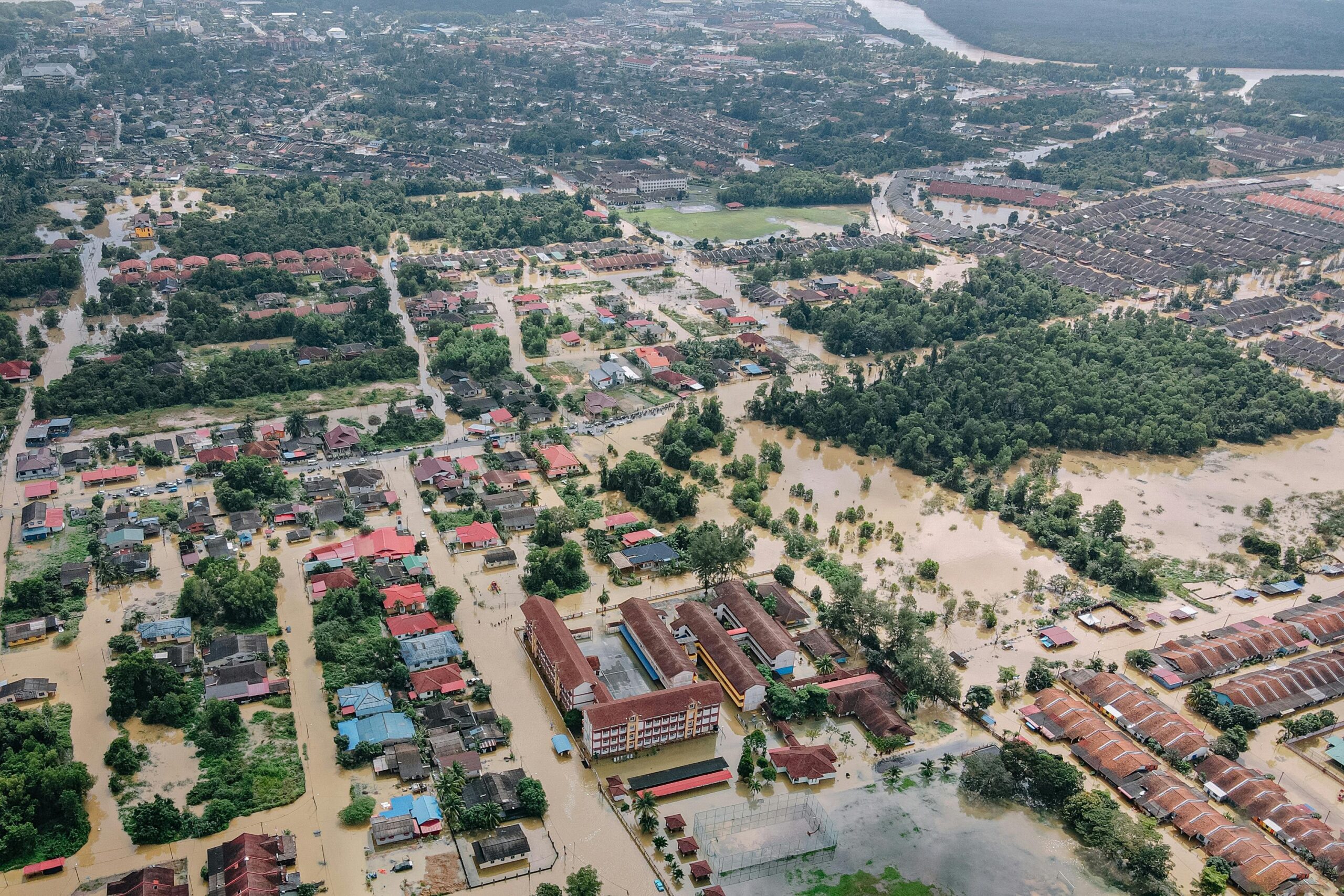
Conversely, too much water presents equally severe challenges. Flash flooding, driven by more intense precipitation events, damages inventory, disrupts operations, and creates liability issues for property owners. The insurance industry, serving as society’s primary risk transfer mechanism, is struggling to price these evolving hazards accurately, with some insurers withdrawing entirely from high-risk markets.
Resource Scarcity and the Materials Economy
Climate change is fundamentally altering the availability and cost of raw materials that underpin modern civilization. Mining operations face water scarcity challenges, extreme weather disruptions, and increasingly stringent environmental regulations as communities recognize the cumulative impacts of resource extraction in a climate-stressed world.
Agricultural commodities present a stark example of climate-driven material risk. Shifting growing zones, changing precipitation patterns, and increased pest pressures are forcing farmers to adapt or abandon traditional practices. Crop failures in major producing regions send shockwaves through global markets, affecting everything from food prices to biofuel production to livestock feed availability.
The Energy Transition Paradox ⚡
The transition away from fossil fuels creates its own material risk landscape. Demand for lithium, cobalt, rare earth elements, and other materials essential for renewable energy technologies and battery storage is skyrocketing. Yet the extraction and processing of these materials often occurs in regions vulnerable to climate impacts, creating potential bottlenecks in the very supply chains meant to address climate change.
Copper, essential for electrical infrastructure and renewable energy systems, exemplifies this challenge. Major copper mining regions face water scarcity issues that constrain production capacity. Chile, responsible for roughly 28% of global copper production, is experiencing its longest drought in recorded history, forcing mines to explore costly desalination alternatives or reduce output.
Financial Markets Confront Climate Reality
Investment portfolios constructed on historical risk assumptions are being stress-tested by climate reality. Stranded assets—investments that lose value prematurely due to climate-related factors—represent a growing concern for asset managers. Coal-fired power plants retired ahead of schedule, coastal developments facing uninsurable flood risk, and agricultural land rendered unproductive by drought all exemplify this phenomenon.
Credit ratings agencies have begun incorporating climate risk into their assessments, recognizing that sovereign debt, corporate bonds, and municipal securities all face climate-related vulnerabilities. Countries with significant coastline exposure, economies dependent on climate-sensitive sectors, or limited adaptive capacity are seeing their creditworthiness questioned through a climate lens.
The Rise of Climate Risk Analytics 📊
A new industry has emerged around climate risk quantification and mapping. Sophisticated modeling platforms combine climate science, geospatial data, and financial analytics to project how specific assets will fare under various climate scenarios. These tools range from property-level flood risk assessments to portfolio-wide transition risk analyses examining how carbon pricing or regulatory changes might impact holdings.
However, significant uncertainties remain. Climate models operate with inherent uncertainty bands, localized impacts vary considerably from global trends, and the pace of technological innovation and policy response introduces additional variables. Despite these limitations, climate risk analytics represent a crucial advancement in material risk assessment, providing decision-makers with considerably more information than simple extrapolation of historical patterns.
Supply Chains in a Climate-Altered World
Global supply chains, optimized for efficiency and cost minimization, are proving remarkably vulnerable to climate disruption. Just-in-time manufacturing philosophies and geographically concentrated production create single points of failure that climate events can exploit. The 2011 Thailand floods, which disrupted global hard drive production, and more recent semiconductor shortages exacerbated by drought conditions in Taiwan demonstrate how localized climate impacts ripple globally.
Companies are beginning to map their supply chains with climate vulnerability in mind, identifying critical suppliers in high-risk locations and developing alternative sourcing strategies. This climate-aware supply chain management represents a significant shift from purely cost-based optimization toward resilience-focused approaches that incorporate redundancy and geographic diversification.
The Nearshoring Response 🏭
Climate risk is contributing to the reshoring and nearshoring trend, with companies bringing production closer to end markets partly to reduce climate-related supply chain vulnerability. While labor costs, trade tensions, and logistics considerations drive much of this movement, climate resilience is increasingly factored into site selection decisions. Manufacturing facilities are being designed with climate adaptation in mind, incorporating flood defenses, backup power systems, and water recycling capabilities.
Regional Vulnerability Patterns
Climate impacts don’t distribute evenly—some regions face compounding vulnerabilities while others may experience relative advantages, at least in the near term. Small island developing states confront existential threats from sea-level rise and intensifying tropical cyclones. Sub-Saharan Africa faces agricultural disruption, water stress, and heat extremes that compound existing development challenges.
The Arctic region illustrates the complexity of climate-driven material risk. Rapidly warming temperatures are disrupting indigenous communities and ecosystems, yet simultaneously opening new shipping routes and resource extraction opportunities. These changes create both winners and losers, raising ethical questions about whether climate-driven “opportunities” should be pursued when they stem from broader environmental degradation.
Urban Heat Islands and City-Scale Risk 🏙️
Cities face particular climate vulnerabilities due to concentration of population, infrastructure, and economic activity. Urban heat island effects amplify temperature increases, creating health risks, straining energy systems, and reducing labor productivity. Coastal cities face compounding risks from sea-level rise, storm surge, and land subsidence, sometimes exacerbated by groundwater extraction.
Municipal bonds, long considered relatively safe investments, now carry climate risk considerations. Cities facing significant climate exposure may struggle to maintain infrastructure, provide services, and retain population and tax base, potentially affecting their ability to service debt. Rating agencies are beginning to incorporate these factors, with some vulnerable municipalities seeing downgrades explicitly linked to climate exposure.
Adaptation: The Material Risk Response
Recognizing climate-driven material risks has sparked significant investment in adaptation measures. Coastal defenses, improved drainage systems, drought-resistant crops, and climate-resilient infrastructure represent efforts to reduce vulnerability. However, adaptation itself creates new material considerations—who pays for these measures, how effective will they prove, and what happens to assets in areas where adaptation proves economically unfeasible?
The concept of “maladaptation” has emerged to describe adaptation measures that inadvertently increase vulnerability or create new problems. Seawalls that protect one property while redirecting wave energy to neighboring areas, or air conditioning that provides individual comfort while increasing urban heat and energy system strain, exemplify this challenge.
Looking Forward: Anticipating Tomorrow’s Risk Maps
The material risk landscape will continue evolving as climate change progresses and our understanding improves. Several trends appear likely: increased granularity in risk assessment, moving from regional to asset-specific analysis; greater integration of climate risk into standard financial reporting; and growing divergence between climate-resilient and climate-vulnerable assets in terms of valuation and insurability.
Technology will play an expanding role, with artificial intelligence and machine learning enabling more sophisticated pattern recognition and predictive modeling. Satellite imagery, IoT sensors, and real-time monitoring will provide ever more detailed information about climate impacts as they unfold, potentially enabling more rapid response but also revealing vulnerabilities previously hidden.
The Governance Challenge 📋
Effective material risk mapping requires appropriate governance structures. Boards of directors increasingly face pressure to demonstrate climate competency and incorporate climate considerations into strategic planning and risk management. Regulatory frameworks are evolving, with some jurisdictions mandating climate risk disclosure and stress testing for financial institutions.
However, significant gaps remain between climate science, risk assessment, and decision-making processes. Many organizations lack personnel with the interdisciplinary expertise to bridge these domains effectively. Professional development in climate risk assessment is struggling to keep pace with demand, creating talent shortages that limit the speed and quality of organizational responses.

Transforming Uncertainty Into Actionable Intelligence
The fundamental challenge in mapping climate-driven material risk lies in translating scientific projections with inherent uncertainties into actionable business and investment decisions. Scenario analysis has emerged as a key tool, examining how assets and strategies might perform under different climate futures rather than attempting to predict a single outcome.
Leading organizations are moving beyond compliance-driven climate risk assessment toward strategic integration, viewing climate considerations as fundamental to long-term value creation rather than simply a reporting requirement. This shift reflects growing recognition that climate change represents not just an environmental issue but a comprehensive transformation of the operational and financial landscape.
The material risk maps of tomorrow will look dramatically different from those of the past. Assets once considered secure may become stranded, while regions previously overlooked might emerge as climate refuges. Resources taken for granted may become scarce, driving innovation in efficiency and substitution. The organizations, investors, and communities that successfully navigate this transition will be those that embrace the complexity, acknowledge the uncertainty, and act decisively based on the best available information rather than waiting for perfect certainty that will never arrive.
Climate change is rewriting the rules of material risk assessment in real-time. The question is no longer whether climate should factor into risk mapping, but how effectively we can integrate this knowledge into decisions that will shape our collective future. The maps are being redrawn—success belongs to those who learn to read them correctly.